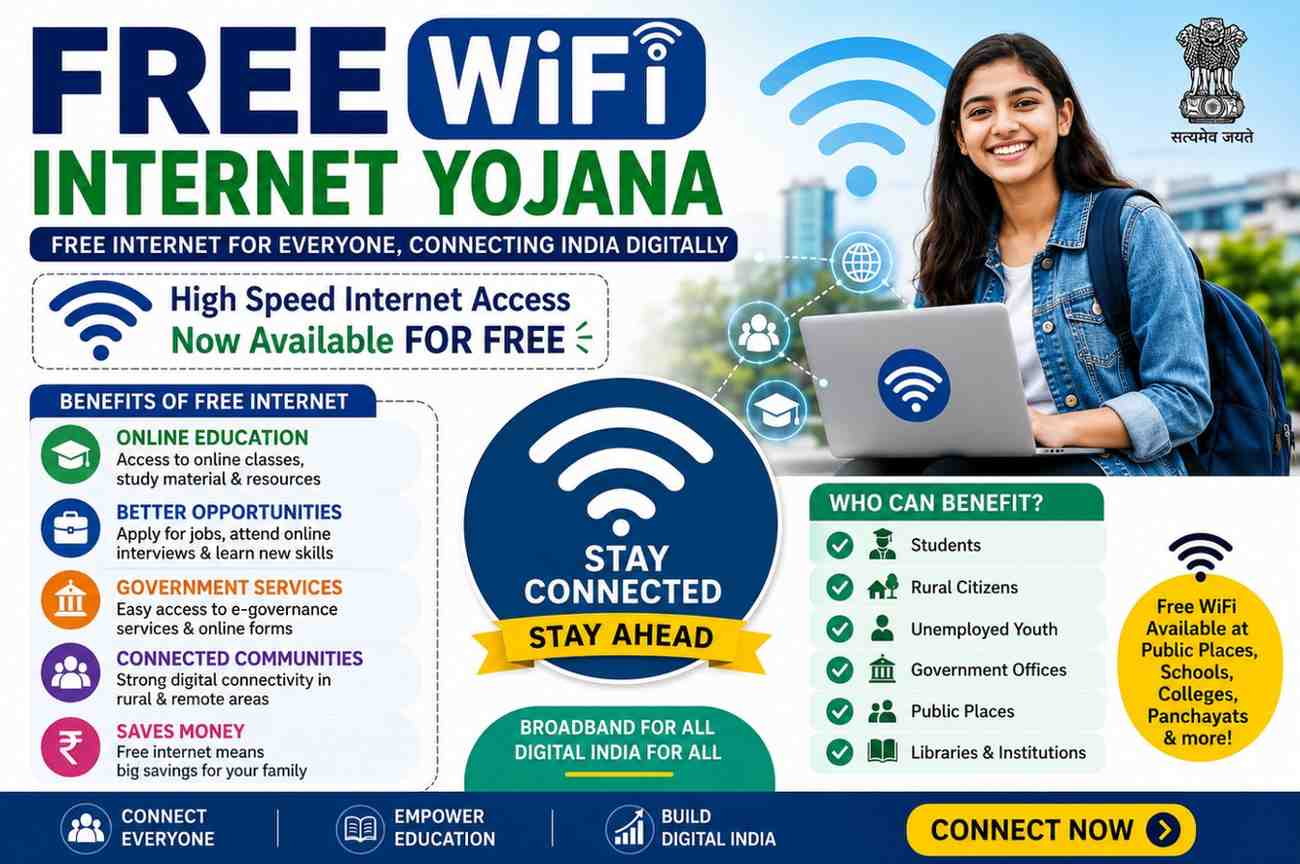
In today’s digital world, the internet has become one of the most important necessities of daily life. From online education and digital payments to government services and job applications, almost everything now depends on internet access. However, many students and low-income families still struggle to afford proper internet services. To solve this problem, the government has introduced several initiatives related to Free Internet/WiFi Yojana.
The main goal of these schemes is to provide affordable or free internet access to students, rural areas, unemployed youth, and economically weaker citizens so that everyone can benefit from Digital India services.
In this article, you will learn everything about Free Internet/WiFi Yojana 2026, including its objectives, benefits, eligibility, application process, and important facts.
What is Free Internet/WiFi Yojana?
Free Internet/WiFi Yojana refers to various government initiatives that aim to provide free or low-cost internet access to the public. Under these schemes, free WiFi hotspots may be installed in public places such as:
- Railway stations
- Bus stands
- Government schools
- Colleges
- Panchayat offices
- Libraries
- Public areas in smart cities
In some states, students may also receive free data benefits, internet support, or digital devices for online learning.
Objective of the Scheme
The government launched such schemes to improve digital connectivity and make internet services accessible to everyone.
The major objectives include:
- Promoting digital education
- Supporting online learning for students
- Connecting rural areas to the internet
- Expanding Digital India services
- Helping unemployed youth access online opportunities
- Improving access to government services
Who Can Benefit from This Scheme?
Different states may have different rules, but generally the following people can benefit:
- School students
- College students
- Competitive exam aspirants
- Unemployed youth
- Rural citizens
- Economically weaker families
- People using digital government services
Major Benefits of Free Internet/WiFi Yojana
1. Support for Online Education
The internet has become essential for modern education. Students use:
- Online classes
- YouTube learning
- PDF notes
- Digital assignments
- Online exams
Free internet schemes help students continue their education without financial pressure.
2. Digital Connectivity in Rural Areas
Many villages still face poor internet access. Free WiFi initiatives help rural citizens connect with the digital world and improve communication and education.
3. Easier Access to Government Services
With internet access, citizens can easily use online government services such as:
- Aadhaar updates
- PAN card applications
- Online banking
- Government forms
- Scholarship applications
4. Employment Opportunities for Youth
The internet allows unemployed youth to:
- Search for jobs online
- Learn new skills
- Start freelancing
- Build online businesses
- Attend online interviews
Places Where Free WiFi is Available
The government and some telecom companies provide free WiFi services at several public locations, including:
- Railway stations
- Airports
- Government colleges
- Smart city zones
- Panchayat offices
- Public libraries
- Some schools and universities
What is PM-WANI Scheme?
The Government of India launched the PM-WANI (Prime Minister Wi-Fi Access Network Interface) scheme to expand public WiFi networks across the country.
The scheme allows local shopkeepers and small internet providers to offer public WiFi services.
Benefits of PM-WANI:
- Affordable internet access
- Better connectivity in villages
- Support for small businesses
- Expansion of digital infrastructure
Free Internet Schemes for Students
Many state governments have introduced special digital support programs for students. These may include:
- Free data packs
- Free tablets
- Free laptops
- Internet allowance
During the pandemic period, some states also provided free recharge support for students attending online classes.
How to Apply for Free Internet/WiFi Yojana?
If your state government has launched such a scheme, you may apply online by following these steps:
Step 1:
Visit the official government website of your state.
Step 2:
Search for the Free Internet/WiFi Scheme section.
Step 3:
Register using your mobile number and Aadhaar card.
Step 4:
Fill in the required details:
- Name
- Address
- Educational information
- Income details
Step 5:
Upload necessary documents.
Step 6:
Submit the application form and save the registration number.
Required Documents
Applicants may need the following documents:
- Aadhaar Card
- Identity proof
- Residence certificate
- Student ID card
- Income certificate
- Passport-size photo
- Mobile number
Is the Scheme Genuine?
Yes, some government schemes genuinely provide free internet support or public WiFi access. However, many fake websites and misleading social media posts claim to offer “free recharge” or “unlimited free internet” and may steal personal information.
Applicants should always:
- Use official government websites only
- Avoid fake apps and links
- Never share OTPs or banking details
- Verify information before applying
Importance of Proper Internet Usage
Free internet should not only be used for entertainment or social media. If used correctly, the internet can help people:
- Learn valuable skills
- Build careers
- Start online businesses
- Earn money online
- Improve education
Today, thousands of people earn online through:
- YouTube
- Blogging
- Freelancing
- Affiliate marketing
- E-commerce
Challenges of Free Internet Schemes
Although these schemes are useful, there are still some challenges:
- Weak internet speed in rural areas
- Limited WiFi coverage
- Lack of digital awareness
- Cybersecurity risks
- Fake scheme scams
The government continues working to improve digital infrastructure across India.
Conclusion
Free Internet/WiFi Yojana 2026 is an important step toward building a digitally connected India. These schemes aim to help students, unemployed youth, and rural citizens access education, government services, and employment opportunities through internet connectivity.
Before applying, always verify the scheme details on official government websites. With proper use of the internet, young people can improve their skills, education, and future career opportunities in the growing digital economy.